
The INF Treaty – A Cold War Thaw That Changed the Nuclear Game
In December 1987, something almost surreal happened.
The United States and the Soviet Union—two nuclear superpowers armed to the teeth—agreed not to limit, not to cap, but to eliminate an entire class of nuclear weapons.
That agreement was The INF Treaty.
Signed by Ronald Reagan and Mikhail Gorbachev, the Intermediate-Range Nuclear Forces Treaty dismantled nearly 2,700 missiles and introduced verification mechanisms that were once politically unthinkable.
Honestly, if you study Cold War nuclear doctrine closely, you realize just how radical that was.
And yet—by 2019, the treaty collapsed.
So what made The INF Treaty possible? Why did it matter so deeply to European security? And why couldn’t it survive into the 21st century?
Let’s unpack this carefully.
Europe in the Crosshairs: The Euromissile Crisis


By the late 1970s, the Cold War’s most dangerous theater wasn’t Washington or Moscow.
It was Europe.
The Soviet Union deployed SS-20 intermediate-range ballistic missiles capable of striking Western Europe within minutes. These were mobile, accurate, and nuclear-capable.
NATO responded by planning deployment of Pershing II missiles in West Germany.
This triggered the Euromissile Crisis.
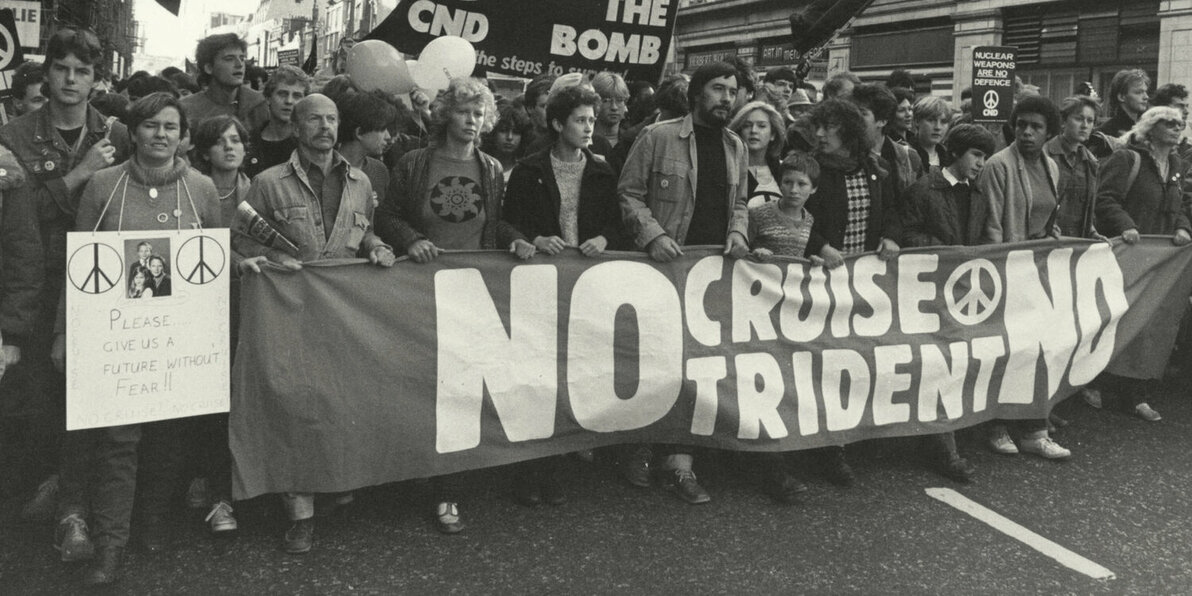
Mass protests erupted across Europe. Citizens feared becoming the battlefield of a “limited” nuclear war. And that word—limited—was chilling.
Because intermediate-range missiles (500–5,500 km) reduced warning times dramatically. Leaders would have only minutes to decide whether to retaliate.
Wait—this gets interesting.
Shorter warning times increase the risk of miscalculation. And miscalculation in nuclear strategy isn’t theoretical.
It’s existential.
What The INF Treaty Actually Eliminated


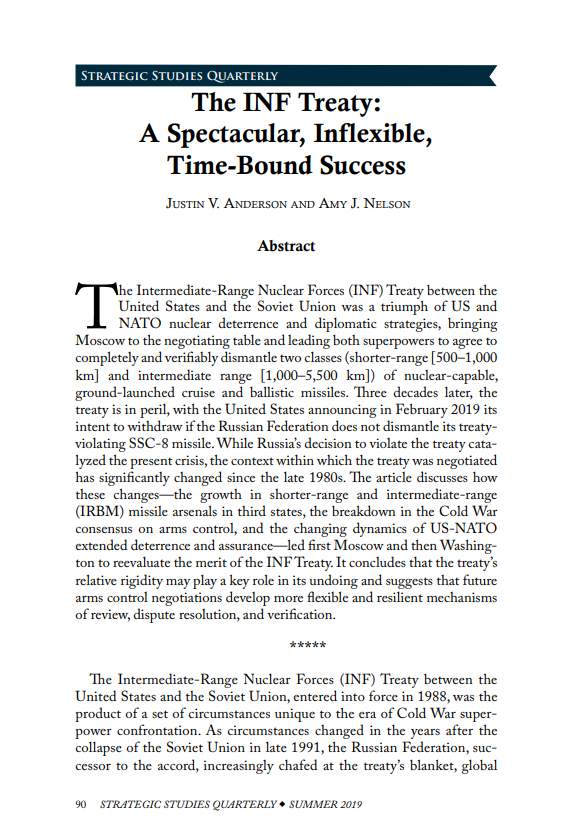
Signed on December 8, 1987, in Washington, D.C., The INF Treaty required both nations to eliminate all ground-launched ballistic and cruise missiles with ranges between 500 and 5,500 kilometers.
Not warheads.
Not partial reductions.
Entire delivery systems.
By 1991:
-
2,692 missiles were destroyed.
-
U.S. Pershing II and cruise missiles were dismantled.
-
Soviet SS-20 systems were eliminated.
And here’s what made it revolutionary: verification.
Inspectors from both sides conducted on-site inspections. Facilities were monitored. Destruction was observed directly.
This level of transparency during the Cold War was extraordinary.
It paved the way for broader strategic agreements like START I.
Why Reagan and Gorbachev Took the Leap
The common narrative oversimplifies things.
Reagan as the hardliner who forced Soviet collapse. Gorbachev as the reformer who conceded.
Reality was more nuanced.
Reagan genuinely believed nuclear war was unwinnable. His rhetoric repeatedly emphasized that nuclear weapons should never be used.
Meanwhile, Gorbachev faced severe economic stagnation inside the Soviet system. Military spending strained an already fragile economy.
Then came Chernobyl disaster.
Chernobyl exposed systemic weaknesses and intensified awareness of nuclear catastrophe.
Both leaders saw opportunity—and risk.
Signing The INF Treaty required confronting domestic skeptics, military establishments, and ideological resistance.
It wasn’t surrender.
It was calculated risk-taking.
The Strategic Significance: Beyond Missile Counts
From a technical standpoint, intermediate-range missiles destabilize deterrence because of compressed timelines.
If detection-to-impact time is under 10 minutes, leaders may adopt “launch-on-warning” postures.
That increases accidental war risk.
The INF framework removed this specific threat from Europe.
It reduced crisis instability.
It strengthened NATO cohesion.
It lowered hair-trigger decision dynamics.
But more subtly—it changed the psychology of arms control.
For the first time, elimination—not limitation—became achievable.
That precedent mattered.
The Post-Cold War Shift
After 1991, the Soviet Union dissolved. Russia inherited treaty obligations.
Initially, compliance continued.
But global geopolitics shifted.
The treaty was bilateral. It did not include rising powers.
And that’s where structural tension began.
The Collapse in 2019


By the mid-2010s, the United States accused Russia of violating the treaty by developing and deploying the 9M729 ground-launched cruise missile.
Russia denied the allegations and counter-accused the U.S. of treaty breaches related to missile defense installations.
In 2019, under Donald Trump, the United States formally withdrew. Russia followed shortly after.
The treaty ended.
Quietly.
No dramatic summit. No symbolic confrontation.
Just termination.
But strategically, it marked the erosion of a cornerstone Cold War arms control framework.
The China Factor
Here’s the uncomfortable truth.
The INF Treaty bound only the U.S. and the Soviet Union (later Russia).
It did not constrain China.
By the 2010s, China had developed significant intermediate-range missile capabilities, many falling squarely within INF-prohibited ranges.
From Washington’s perspective, remaining bound by the treaty created asymmetry in the Indo-Pacific.
Arms control built for bipolar rivalry struggled in a multipolar world.
And this structural mismatch became politically unsustainable.
What Was Lost
When The INF Treaty ended:
-
Legal prohibition on intermediate-range ground missiles disappeared.
-
The norm against such deployments weakened.
-
European allies faced renewed strategic uncertainty.
Perhaps most importantly, verification mechanisms eroded further.
And once trust mechanisms degrade, rebuilding them is exponentially harder.
Lessons for Modern Arms Control
Looking at this from an advanced analytical perspective, three lessons emerge:
-
Arms control must adapt to changing power distributions.
-
Verification is non-negotiable.
-
Political courage is essential for breakthrough agreements.
Future frameworks may need to be multilateral. But designing such treaties in today’s fragmented geopolitical environment is far more complex than during late Cold War détente.
Still, history shows something important:
Even at peak hostility, adversaries negotiated.
That precedent remains powerful.
A Reflective Ending
When Reagan and Gorbachev signed The INF Treaty, they didn’t end the Cold War overnight.
But they dismantled an entire class of weapons aimed at Europe.
That was tangible progress.
The treaty’s collapse does not erase its achievement. It highlights how fragile strategic stability can be.
Honestly, I think the story of the INF Treaty isn’t about failure.
It’s about proof.
Proof that even the most entrenched rivalries can produce structural restraint.
The harder question for 2026 isn’t whether it once worked.
It’s whether today’s leaders are willing to try again.
Frequently Asked Questions
1. What was The INF Treaty?
The INF Treaty was a 1987 agreement between the United States and the Soviet Union eliminating all ground-launched ballistic and cruise missiles with ranges between 500 and 5,500 kilometers.
2. Why was The INF Treaty significant?
It was the first arms control agreement to eliminate an entire category of nuclear delivery systems and included intrusive on-site inspections.
3. Why did it collapse?
The U.S. accused Russia of violating the treaty through development of the 9M729 missile. Strategic concerns about China’s growing missile arsenal also contributed.
4. Did Europe support its termination?
Most NATO allies expressed concern over the withdrawal, fearing renewed missile deployments and regional instability.
5. Could a similar treaty be revived?
Potentially—but it would likely require broader participation, including China, and updated verification frameworks.